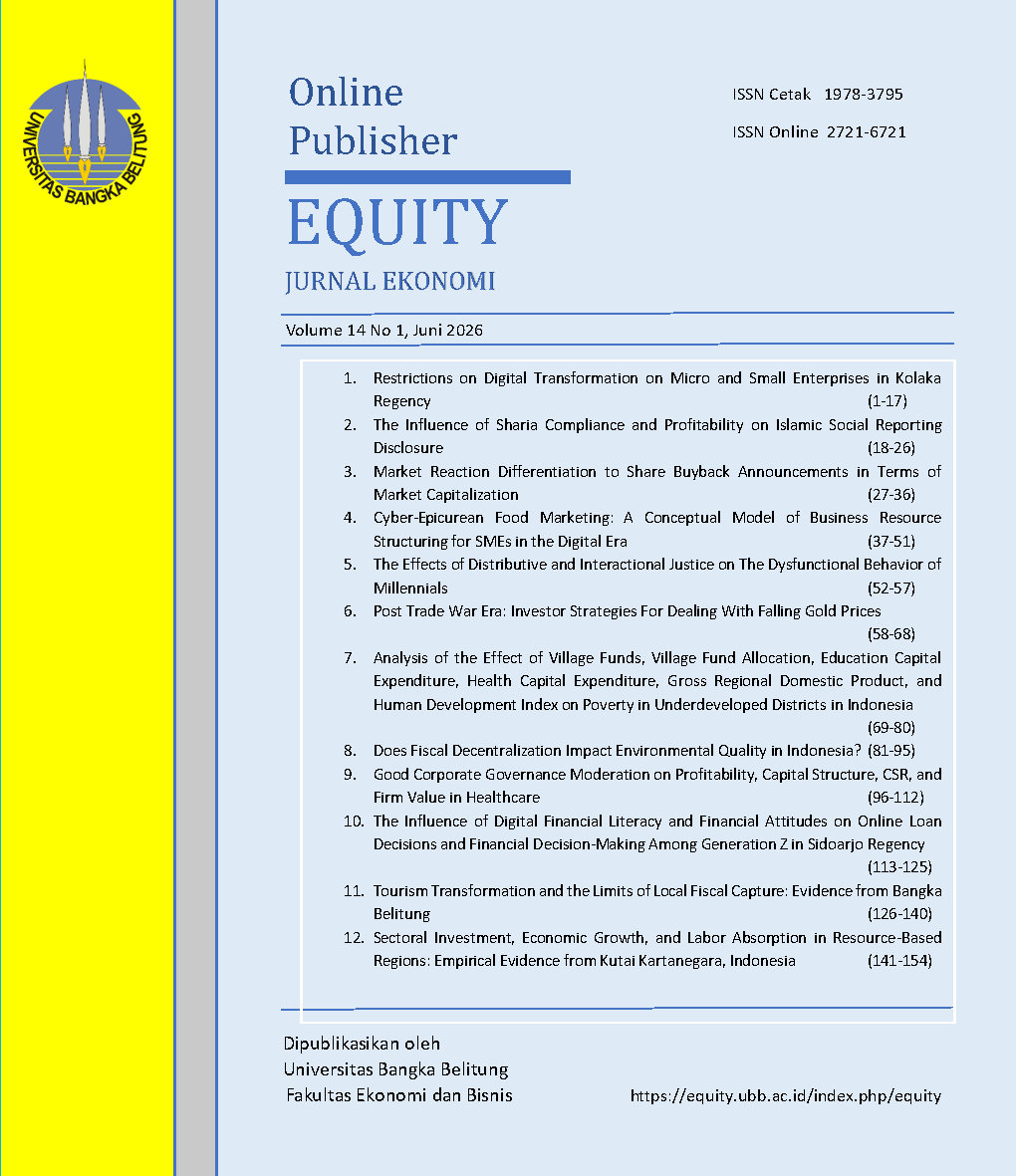
Restrictions on Digital Transformation on Micro and Small Enterprises in Kolaka Regency
DOI:
https://doi.org/10.33019/equity.v14i1.549Keywords:
Digital Transformation, Micro And Small Enterprises, Internal Restriction, External Restrictions, Logistic RegressionAbstract
The results of the National Digital Transformation Index (TDN) measurement in Southeast Sulawesi Province in 2022 are 44, indicating that digital transformation is still classified as C (adequate). Limited technology adoption and low innovation in business among micro and small business actors are one of the causes of low performance in the business pillar, which affects the acquisition of the TDN Index score. This study aims to investigate the factors that inhibit the implementation of digital transformation among micro and small business actors in Kolaka Regency. The sample in this study is 106 micro and small business actors with various types of businesses, including culinary, fashion, handicrafts, and agribusiness. Binary logistic regression analysis was used to estimate the inhibiting factors influencing the implementation of digital transformation in micro and small businesses. The study's findings reveal that digital knowledge, digitalization training, and digital transaction security are the primary factors hindering digital transformation among micro and small business actors in Kolaka Regency. Micro and small business actors who are unable to access information and participate in the digital community, have not received digital marketing and financialization training, and have not utilized the official digital transaction system are more likely to remain digitally untransformed. Meanwhile, the availability of digital devices and digital ecosystems does not have a significant influence on digital transformation. These findings recommend strategies to enhance digital transformation for micro and small business actors by focusing on increasing digital literacy and knowledge, continuous digitalization training, and building trust in the security of digital transactions.
Downloads
References
Agresti, A. (2013). Categorical Data Analysis Third Edition. John Wiley & Sons Inc.
Agustin, N., Hidalgo, D. T., & Morante, B. J. (2024). Challenges in Digital Transformation of Microenterprises in Nueva Ecija: A Basis for Risk Management Plan. Journal of Economics, Management and Trade, 30(4), 13–26. https://doi.org/10.9734/jemt/2024/v30i41201
Aisyah, S., Rokan, M. K., & Putri, F. (2023). Analisa Faktor yang Mempengaruhi Penerapan Transformasi Digital UMKM Kota Dumai SKR dan Syauqi (Studi Perbandingan). ISOQUANT : Jurnal Ekonomi, Manajemen Dan Akuntansi, 7(2), 229–240. https://doi.org/10.24269/iso.v7i2.2294
Amalia, F., Dyah, A., Citraresmi, P., Rucitra, A. L., Mustaniroh, S. A., & Kartikaningrum, W. (2024). Pengaruh faktor-faktor resiliensi terhadap kesiapan transformasi digital di UKM. Jurnal Teknologi Industri Pertanian, 18(1), 67–78. https://doi.org/10.21107/agrointek.v18i1.17527
Arestha, R., Afifah, N., & Mastaruddin. (2025). Mendorong Transformasi Digital UMKM : Analisis Faktor-Faktor Yang Memengaruhi Niat Adopsi Fintech di Indonesia. Jurnal Manajemen Terapan Dan Keuangan, 14(2), 948–961. https://online-journal.unja.ac.id/mankeu/article/view/44970
Arjang, A., Wadu, R. M. B., & Kraugusteeliana, K. (2025). Mengakselerasi Daya Saing UMKM melalui Inovasi Teknologi: Peran Strategis Literasi Digital Masyarakat dalam Mewujudkan Ekosistem Ekonomi Berbasis Platform. Jurnal Minfo Polgan, 14(2), 1608–1618. https://doi.org/10.33395/jmp.v14i2.15190
Asrol, S., Lidyah, R., Hartini, T., & Muhammadinah, M. (2022). Peran Percepatan Transformasi Digital untuk Keberlanjutan Bisnis dan Pemulihan Ekonomi Pelaku UMKM di Kota Palembang Pascapandemi. Jurnal Intelektualita: Keislaman, Sosial Dan Sains, 11(2), 242–246. https://doi.org/10.19109/intelektualita.v11i2.14685
Bahasoan, A. N., S, Q. N., Wahdaniah, B, I., & Azis, M. S. (2024). Transformasi Digital pada UMKM : Penggerak Pertumbuhan Ekonomi dan Inklusi di Negara Berkembang. Jurnal Indragiri Penelitian Multidisiplin, 5(1), 9–19.
Brunetti, F., Matt, D. T., Bonfanti, A., De Longhi, A., Pedrini, G., & Orzes, G. (2020). Digital transformation challenges: strategies emerging from a multi-stakeholder approach. The TQM Journal, 32(4), 697–724. https://doi.org/10.1108/TQM-12-2019-0309
Chen, C.-L., Lin, Y.-C., Chen, W.-H., Chao, C.-F., & Pandia, H. (2021). Role of Government to Enhance Digital Transformation in Small Service Business. Sustainability, 13(3), 1028. https://doi.org/10.3390/su13031028
Coco, N., Colapinto, C., & Finotto, V. (2024). Fostering digital literacy among small and micro‐enterprises: digital transformation as an open and guided innovation process. R&D Management, 54(1), 118–136. https://doi.org/10.1111/radm.12645
Cong, L. W., Yang, X., & Zhang, X. (2024). Small and Medium Enterprises Amidst the Pandemic and Reopening: Digital Edge and Transformation. Management Science, 70(7), 4564–4582. https://doi.org/10.1287/mnsc.2023.02424
Darmeinis. (2024). Transformasi Digital dalam Manajemen Rantai Pasokan: Tantangan dan Peluang bagi UMKM di Indonesia. Juria: Jurnal Ekonomi Utama, 3(2), 212–221. https://doi.org/https://doi.org/10.55903/juria.v3i2.279
Destrian, O. (2025). The influence of manager’s digital literacy on SMEs’ digital transformation in Indonesia: A micro-foundational context. IEEE Transactions on Engineering Management, 1–14. https://doi.org/10.1109/TEM.2024.3467925
Febriyani, W., Supratman, N. A., & Witjaksono, R. W. (2024). Exploring the Contribution of Fintech to Digital Transformation in Indonesian MSMEs: A Literature Review. Sistemasi, 13(6), 2564. https://doi.org/10.32520/stmsi.v13i6.4638
Ferdiansyah, M. R., & Tricahyono, D. (2023). Identifikasi Faktor-Faktor Penghambat Implementasi Transformasi Digital Pada Umkm (Studi Kasus Hotel Flamboyan Indah). JIMEA Jurnal Ilmiah (Manajemen, Ekonomi, Dan Akuntansi, 7(2), 1583–1595.
Firmansyah, D., & Dede. (2022). Teknik Pengambilan Sampel Umum dalam Metodologi Penelitian: Literature Review. Jurnal Ilmiah Pendidikan Holistik (JIPH), 1(2), 85–114. https://doi.org/10.55927/jiph.v1i2.937
Garmann-Johnsen, N. F., Eikebrokk, T. R., & Olsen, D. H. (2024). The Triple Bottom Line Co-creation Canvas. Procedia Computer Science, 239, 322–329. https://doi.org/10.1016/j.procs.2024.06.178
Hardiyansyah, Aries, Muchardie, B. G., & Rillia, A. (2024). Impact of External Factors on Determining E-commerce Benefits among SMEs in Jakarta and Palembang. JOIV : International Journal on Informatics Visualization, 8(1), 213. https://doi.org/10.62527/joiv.8.1.1371
Hariyanti, S., & Kristanti, D. (2024). Digital Transformation in MSMEs: an Overview of Challenges and Opportunities in Adopting Digital Technology. Jurnal Manajemen Bisnis, Akuntansi Dan Keuangan (JAMBAK), 3(1), 37–46.
Hasan, M., Dzakiyyah, A., Kumalasari, D. A., Safira, N., & Aini, S. N. (2021). Transformasi Digital UMKM Sektor Kuliner Di Kelurahan Jatinegara, Jakarta Timur. Jurnal Bisnis Dan Kewirausahaan, 17(2), 135–150. https://doi.org/10.31940/jbk.v17i2.2529
Hendrawan, S. A., Afdhal Chatra, Nurul Iman, Soemarno Hidayatullah, & Degdo Suprayitno. (2024). Digital Transformation in MSMEs: Challenges and Opportunities in Technology Management. Jurnal Informasi Dan Teknologi, 6, 141–149. https://doi.org/10.60083/jidt.v6i2.551
INDEF. (2024). Peran Platform Digital Terhadap Pengembangan UMKM di Indonesia. chrome-extension://efaidnbmnnnibpcajpcglclefindmkaj/https://indef.or.id/wp-content/uploads/2024/01/Laporan-Final-Peran-Platform-Digital-Terhadap-Pengembangan-UMKM-di-Indonesia-INDEF.pdf
Kementerian Komunikasi dan Digital Republik Indonesia, & LPEM FEB UI. (2024). Indeks Transformasi Digital Indonesia. chrome-extension://efaidnbmhttps//digital2045.id/wp-content/uploads/2024/12/pocketbookIndeksTDN.pdf
Kokolek, N., Jakovic, B., & Curlin, T. (2019). Digital knowledge and skills – key factors for digital transformation. Annals of DAAAM and Proceedings of the International DAAAM Symposium, 30(1), 46–53. https://doi.org/10.2507/30th.daaam.proceedings.006
Lei, J., Indiran, L., & Haiyat Abdul Kohar, U. (2023). Barriers to Digital Transformation among MSME in Tourism Industry: Cases Studies from Bali. International Journal of Academic Research in Business and Social Sciences, 13(3). https://doi.org/10.6007/ijarbss/v13-i3/16575
Lestari, N. P., & Choirunnisa, Z. (2025). Transformasi Digital dan Ketahanan UMKM: Systematic Literature Review (SLR). Jambura Economic Education Journal, 7(1), 355–372.
Li, H., Yang, Z., Jin, C., & Wang, J. (2023). How an industrial internet platform empowers the digital transformation of SMEs: theoretical mechanism and business model. Journal of Knowledge Management, 27(1), 105–120. https://doi.org/10.1108/JKM-09-2022-0757
Manapa Sampetoding, E. A., & Er, M. (2024). Digital Transformation of Smart Village: A Systematic Literature Review. Procedia Computer Science, 239(2), 1336–1343. https://doi.org/10.1016/j.procs.2024.06.304
Marzuki, S. N., & Yasin, I. M. (2021). Factors Influencing Online Shoppers to Shop at Marketplace or Website: A Qualitative Approach. Asian Journal of Business and Management, 9(4), 68–75. https://doi.org/10.24203/ajbm.v9i4.6736
Muniraju, Y., & Hariprasad, S. (2019). Digital payment: Rural web users’ perception during online shopping. International Journal of Social and Economic Research, 9(3), 147. https://doi.org/10.5958/2249-6270.2019.00026.6
Nurmin, D., Khasanah, L. D. N., Anggraeni, S., & Nohe, Andi, D. (2022). Penentuan Ketepatan Klasifikasi Indeks Kedalaman Kemiskinan di Indonesia dengan Model Logit. Prosiding Seminar Nasional Matematika, Statistik, Dan Aplikasinya Terbitan II, Mei 2022 Samarinda, Indonesia, 334–343.
Oberländer, A. M., Karnebogen, P., Rövekamp, P., Röglinger, M., & Leidner, D. E. (2025). Understanding the influence of digital ecosystems on digital transformation: The OCO (orientation, cooperation, orchestration) theory. Information Systems Journal, 35(1), 368–413. https://doi.org/10.1111/isj.12539
Onitsuka, K., Hidayat, A. R. R. T., & Huang, W. (2018). Challenges for the next level of digital divide in rural Indonesian communities. Electronic Journal of Information Systems in Developing Countries, 84(2), 1–25. https://doi.org/10.1002/isd2.12021
Pradesa, E., Syahrani, T., & Sakti, R. E. (2023). Transformasi Digital Adopsi Software as a Service Layanan Cloud Accounting Oleh UMKM. EKOMBIS REVIEW: Jurnal Ilmiah Ekonomi Dan Bisnis, 11(2), 1669–1682. https://doi.org/10.37676/ekombis.v11i2.3949
Raharjo, K., Afrianty, T. W., & Prakasa, Y. (2024). Digital literacy and business transformation: social-cognitive learning perspectives in small business enterprises. Cogent Business & Management, 11(1). https://doi.org/10.1080/23311975.2024.2376282
Rupeika-Apoga, R., & Petrovska, K. (2022). Barriers to Sustainable Digital Transformation in Micro-, Small-, and Medium-Sized Enterprises. Sustainability (Switzerland), 14(20). https://doi.org/10.3390/su142013558
Sabaruddin, A., Maulid, Taslim, Septiana, A. R., Jamaludin, I. I., Triani, & Junus, I. (2024). Identifikasi Potensi Pengembangan Usaha Mikro Kecil Menengah di Desa Oko-Oko Kecamatan Pomalaa Kabupaten Kolaka Sulawesi Tenggara. Jurnal Kolaboratif Sains, 7(1), 1–11. https://doi.org/10.56338/jks.v7i1.4687
Sapriyadi, S., Syaiful, M., & Wakiya, N. (2023). Pemanfaatan Digitalisasi Untuk Meningkatkan Pendapatan Pelaku Usaha Mikro ( UMK ) Perempuan Di Lorong Wisata Kota Makassar. Benefit: Jurnal Manajemen Dan Bisnis, 8(2), 70–88. https://doi.org/https://doi.org/10.23917/benefit.v8i2.2483
Sisilianingsih, S., Purwandari, B., Eitiveni, I., & Purwaningsih, M. (2023). Analisis Faktor Transformasi Digital Pelayanan Publik Pemerintah Di Era Pandemi. Jurnal Teknologi Informasi Dan Ilmu Komputer, 10(4), 883–892. https://doi.org/10.25126/jtiik.2024107059
Sujarwoto, S., & Tampubolon, G. (2016). Spatial inequality and the Internet divide in Indonesia 2010–2012. Telecommunications Policy, 40(7), 602–616. https://doi.org/10.1016/j.telpol.2015.08.008
Telagawathi, N. L. W. S., Suci, N. M., & Heryanda, K. K. (2022). Strategi Transformasi Digital Umkm Kerajinan Tangan Pada Masa Pandemi Covid-19 Di Kabupaten Gianyar, Bali. Jurnal Ilmu Sosial Dan Humaniora, 11(2), 204–212. https://doi.org/10.23887/jish.v11i2.39734
Thoriq, K. N., Hartoyo, S., & Sasongko, H. (2018). Faktor Internal dan Eksternal yang Memengaruhi Underpricing pada Saat IPO di Bursa Efek Indonesia. Jurnal Aplikasi Bisnis Dan Manajemen, 4(1), 19–31. https://doi.org/10.17358/jabm.4.1.19
Trisninawati, T., & Sartika, D. (2024). Digital literacy model to improve the marketing skills of micro, small, and medium enterprises women with a community-based educational approach. JPPI (Jurnal Penelitian Pendidikan Indonesia) , 10(2), 807–815.
Vinh, H. X., & Linh, N. T. (2022). Digital Ecosystem and Digital Transformation in the Vietnam Electricity Corporation. VNU JOURNAL OF ECONOMICS AND BUSINESS, 2(1). https://doi.org/10.25073/2588-1108/vnueab.4741
Wolf, M., Semm, A., & Erfurth, C. (2018). Digital Transformation in Companies – Challenges and Success Factors (pp. 178–193). https://doi.org/10.1007/978-3-319-93408-2_13
Xicang, Z., Bilal, M., Jiying, W., Sohu, J. M., Akhtar, S., & Itzaz Ul Hassan, M. (2024). Unraveling the Factors Influencing Digital Transformation and Technology Adoption in High-Tech Firms: The Moderating Role of Digital Literacy. Sage Open, 14(4). https://doi.org/10.1177/21582440241300189
Zhao, L., He, Q., Guo, L., & Sarpong, D. (2024). Organizational Digital Literacy and Enterprise Digital Transformation: Evidence From Chinese Listed Companies. IEEE Transactions on Engineering Management, 71, 11884–11897. https://doi.org/10.1109/TEM.2023.3241411
Zhao, T., & Duan, L. (2025). Digital transformation: how digital infrastructure impacts urban livability in China. Applied Economics, 1–17. https://doi.org/10.1080/00036846.2025.2464820
Downloads
Published
Issue
Section
License
Copyright (c) 2026 Sapriyadi Sapriyadi, Surianto Ilham, Andi Rezah Tenri Zizih

This work is licensed under a Creative Commons Attribution 4.0 International License.
Authors who publish journals in Equity: Jurnal Ekonomi agrees with the following conditions:
1. Authors retain copyright and grant the journal right of first publication with the work simultaneously licensed under a Creative Commons Attribution 4.0 International License.
2. Authors are able to enter into separate, additional contractual arrangements for the non-exclusive distribution of the journal's published version of the work (e.g., post it to an institutional repository or publish it in a book), with an acknowledgement of its initial publication in this journal.
3. Every publication (printed/electronic) are open access for educational purposes, research, and library. Other than the aims mentioned above, the editorial board is not responsible for copyright violation.
How to Cite